Creative Circle Embroidery Design Review
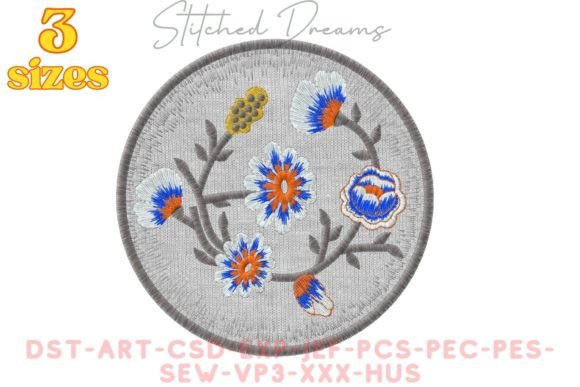
As an embroidery designer who spends weekends hunched over a sewing machine and weekdays planning inventory for craft fairs, I have learned one hard truth: what sells is not always what looks best on the hoop. It is what catches the eye from three feet away, what feels substantial in the hand, and what photographs well enough to drive clicks on Etsy. This week, I pulled a new digital asset into my design software to test its viability for upcoming market season. The file is titled Creative Circle, categorized under Floral Wreaths, and described as a captivating appliqué circle featuring vibrant, textured fabric with striking contrast. After running it through several fabrics and mockups, here is my honest review of how this machine embroidery design performs in the real world of handmade commerce.
First Impressions and Visual Impact
The moment I hooped the stabilizer and started the stitch-out, I could see why this design was tagged as a floral wreath variant, even though the core motif is geometric. The "captivating appliqué circle" description is accurate; the design relies on a central medallion that demands attention. In the context of a busy craft fair booth, where customers are scanning dozens of items in seconds, bold geometry wins. Unlike delicate, tiny floral sprigs that get lost on a dark background, Creative Circle has presence.
The mention of "vibrant and textured fabric" suggests that this is likely an appliqué or heavy satin-stitch design rather than simple outline stitching. For the Etsy seller or boutique maker, this texture translates to perceived value. Handmade goods thrive on tactile appeal. When a customer sees a raised, textured circle, they perceive higher craftsmanship. It feels premium. It does not look like a quick, cheap fill; it looks intentional. However, the success of this visual impact depends entirely on thread contrast. If you pair a muted circle with a similarly toned garment, the magic disappears. You need high-contrast thread colors to make that central motif pop.
Product Suitability: Where Does It Shine?
I tested Creative Circle across a range of potential crafter fair products. Here is where it stands out:
- Tote Bags: This is perhaps the strongest application. A large canvas tote bag provides a flat, expansive surface that allows the circle to breathe. Placed centrally or slightly off-center, it acts as a standalone piece of art. It transforms a basic $5 blank into a $25 fashion accessory. As a tote bag design, it is versatile enough for grocery runs or library visits, appealing to a broad demographic.
- Aprons and Tea Towels: Kitchen textiles are impulse-buy staples at markets. On a white or cream tea towel, a vibrant circular appliqué adds a modern farmhouse or contemporary chic vibe. It works beautifully as a focal point above the pocket area of an apron. The symmetry of the circle balances the utilitarian nature of these items, making them feel more decorative and giftable.
- Embroidered Patches and Caps: Because the design is contained within a circle, it is inherently self-contained. This makes it excellent for creating embroidered patches that can be ironed or sewn onto denim jackets, beanies, or baseball caps. The circular shape fits naturally on the curved surface of a cap front without awkward cropping. It creates a clean, badge-like aesthetic that is very popular with younger demographics.
- Pillow Covers and Small Pouches: For smaller items like cosmetic pouches or lumbar pillows, the circle serves as a perfect accent. It is not so large that it overwhelms the item, nor so small that it looks insignificant. It anchors the design, giving the product a finished, professional look.
Production Practicality and Batch Manufacturing
For the small shop product owner, efficiency is money. Can you produce this design in batches? Yes, but with caveats. The "textured fabric" element implies density. High-density stitches take longer to execute than open work. If you are running multiple units for a weekend market, you need to calculate your time per hoop carefully. Ensure your stabilizer choice matches the fabric weight; using too little stabilizer on a dense appliqué will cause puckering, which ruins the saleable quality of the item.
Photography is another critical factor. Designs with strong geometric centers photograph exceptionally well because they provide a clear focal point. When you create a printable mockup for your online listing, the circle draws the eye immediately. It reduces the cognitive load for the buyer—they instantly understand what the product looks like. This clarity can reduce hesitation and increase conversion rates. Furthermore, the symmetry of the design means it looks good regardless of lighting angle, making it easier to shoot consistent photos for your design assets.
Technical Considerations and Careful Use Notes
No design is without its challenges. Before committing to mass production, you must address specific technical risks associated with Creative Circle:
- Dense Stitch Areas: Check the stitch count and density. If the central circle uses heavy satin stitches, ensure your machine needle is sharp and appropriate for the thread type. Thick threads may break if the density is too high for the fabric thickness.
- Fabric Texture vs. Clarity: The description mentions "textured fabric." If you are embroidering onto a highly textured fabric like bouclé or heavy waffle-weave towels, the fine details of the circle may get lost. Always test on your actual target fabric first. Smooth cottons or linens will yield the crispest results.
- Hoop Size Constraints: Verify the recommended hoop size for this digital embroidery file. If the design is large, you may be limited to larger garments like standard tote bags or king-size pillowcases. It may not fit comfortably on smaller items like baby onesies or narrow scarves without resizing, which could distort the aspect ratio.
- Curved Surfaces: When placing this on caps or rounded pouches, distortion can occur. Use a curved hoop attachment or stretch the fabric tautly to maintain the circular integrity. A warped circle looks amateurish and will hurt your brand consistency.
Final Verdict for the Creative Entrepreneur
Creative Circle is a strong contender for any commercial embroidery catalog aiming for a modern, clean aesthetic. It bridges the gap between rustic charm (via the floral/wreath categorization) and modern minimalism (via the geometric center). For the craft fair seller, its versatility across totes, kitchenware, and accessories makes it a low-risk, high-reward investment. It is easy to understand at a glance, photographs beautifully, and feels substantial in the hand.
However, remember that execution is everything. Do not skip the step of creating at least one real mockup before listing. Inspect the stitch density closely. Confirm your commercial licensing terms—just because you bought the file does not automatically grant you the right to sell unlimited quantities of finished goods. Check the license agreement carefully. With proper thread selection, correct stabilizer usage, and smart product pairing, Creative Circle can become a staple in your handmade product lineup, driving sales and building a reputation for quality craftsmanship.