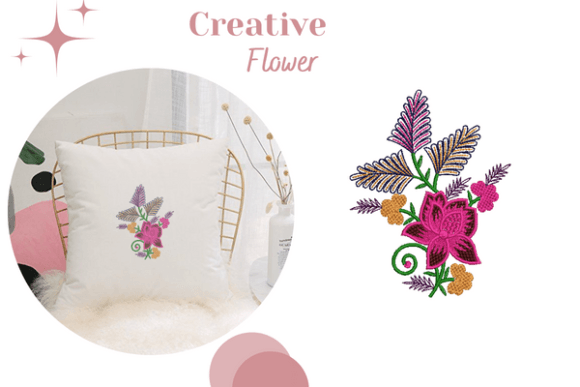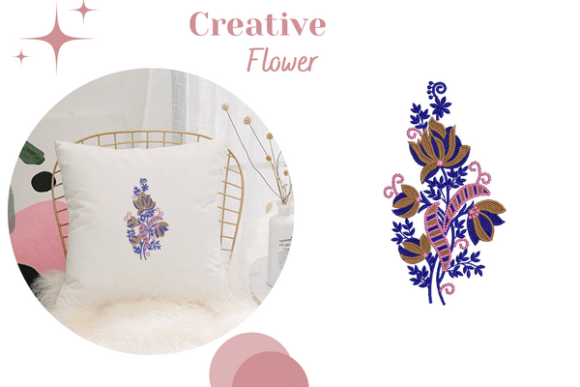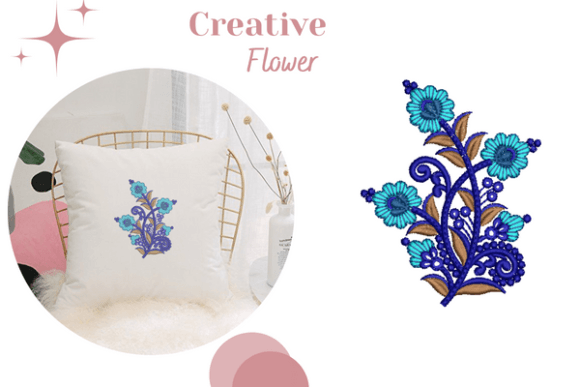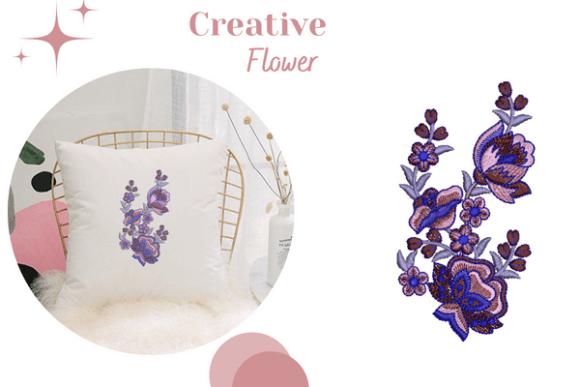
Creative Flowers Embroidery Design Review
If you are preparing for the upcoming weekend craft fair season, you know that your booth display is just as important as the quality of your stitching. As an embroidery designer who has spent years turning digital files into tangible, sellable goods, I look at every new design with one question in mind: Will this move off my table? Today, I am reviewing a design titled Creative Flowers. Based on its description—highlighting its versatility across pillows, towels, apparel, and home decor—I have analyzed how this floral motif performs in real-world production scenarios.
First Impressions and Visual Appeal
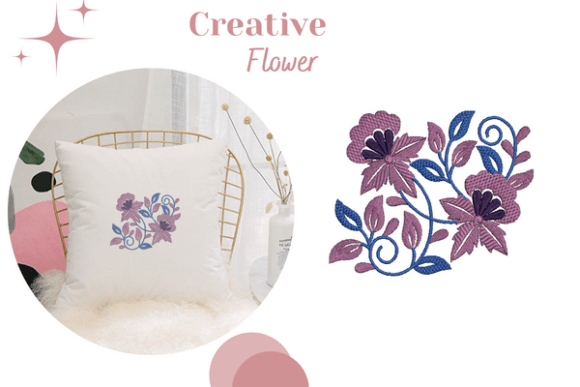
The title "Creative Flowers" suggests a design that is not bound by traditional, rigid botanical structures. In the world of handmade products, customers are often drawn to designs that feel organic yet polished. From a visual standpoint, this design appears to strike a balance between decorative charm and modern elegance. It does not scream for attention with loud, neon colors, but rather invites the eye with a colorful, soft aesthetic that fits seamlessly into farmhouse, rustic, or boutique-style branding.
When I first looked at the preview, the immediate thought was versatility. The description emphasizes that it can be embroidered on "any fabric," which is a green flag for small business owners. This flexibility means you are not locked into a specific material type. Whether you are working with crisp cotton for tea towels or soft linen for pillow covers, the floral elements should hold their shape and color vibrancy. For a craft fair booth, this means you can create a cohesive collection using different base materials while keeping the central design element consistent.
Product Application and Market Fit
To understand the selling potential of Creative Flowers, we need to look at where it shines most. Here is a breakdown of how this design translates into popular craft fair products:
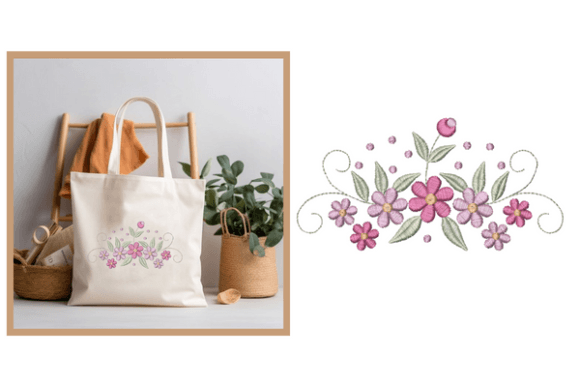
- Tote Bags and Market Bags: A tote bag is often the first item a customer picks up at a booth. Placing Creative Flowers centrally or slightly off-center on a canvas tote creates an instant impulse buy. The floral motif adds a touch of femininity and warmth that appeals to a broad demographic, from students to professionals.
- Kitchen Towels and Aprons: This is a staple category for handmade shops. Because the design is described as adding a "colorful look," it works exceptionally well on neutral backgrounds like white, cream, or light grey kitchen towels. It transforms a basic utility item into a giftable piece. For aprons, it serves as a focal point that elevates the garment from simple workwear to a fashion statement.
- Pillow Covers and Home Decor: Home decor items command higher price points. If Creative Flowers is large enough to serve as a statement piece, it can justify a premium price tag. However, ensure the stitch density is appropriate so the fabric does not pucker, which would detract from the perceived value.
- Embroidered Patches and Caps: Smaller applications require careful consideration. If the design has intricate details, scaling it down for a cap front or a sew-on patch might cause loss of clarity. Test this thoroughly before committing to batch production.
Photography and Online Listings
For Etsy sellers and online artisans, the ability to photograph your product effectively is crucial. Designs with clear, distinct shapes tend to photograph better because they remain recognizable even in thumbnail views. Creative Flowers, with its likely open spaces and defined petal shapes, should translate well into digital mockups. When creating listing images, focus on showing the texture of the thread against the fabric. This tactile quality is what convinces online buyers that the handmade product is worth the investment.
Production Practicality and Efficiency
Time is money in the embroidery business. One of the strongest selling points of this design is its apparent adaptability. If the file is optimized, it should run efficiently on standard hoops. However, before you start churning out dozens of units, consider the following production factors:
- Stitch Density: Check the stitch density in dense areas. High density can lead to longer run times and increased thread breakage. For high-volume items like tea towels, a lighter density allows for faster production without sacrificing visual impact.
- Fabric Texture: As noted in the description, this design works on various fabrics. Be mindful that textured fabrics, such as waffle-weave towels or nubby linens, can obscure fine details. On these surfaces, rely on bold outlines and larger floral elements rather than tiny shading stitches.
- Thread Contrast: The "colorful look" mentioned in the description relies heavily on thread choice. Ensure you have a palette of threads that contrasts well with your chosen base fabrics. Dark florals on dark fabric will disappear, while bright florals on white fabric will pop.
Careful-Use Notes and Technical Checks
Even the best designs can fail if technical details are overlooked. Here are some critical checks to perform before producing finished products:
- Small Details: Inspect the design for any tiny leaves or stems that might get lost in the stitch-out. If these elements are too small, they may clump together, making the flower look muddy rather than delicate.
- Hoop Size Constraints: Confirm the recommended hoop size. If you plan to embroider on curved surfaces like caps, ensure the design fits within the curvature without distortion. You may need to adjust the placement angle.
- Stabilizer Selection: Use the right stabilizer for each fabric type. Cut-away stabilizers are generally safer for stretchy fabrics like jersey (used in apparel), while tear-away works well for stable woven fabrics like towels. Using the wrong stabilizer can lead to puckering or unsupported stitches.
- Commercial Licensing: Before selling these items commercially, verify the license terms of the digital embroidery file. Some designers allow commercial use with purchase, while others restrict it to personal projects only. Always check the design assets documentation to avoid legal issues.
Brand Consistency and Booth Display Strength
A successful craft fair booth tells a story. By choosing Creative Flowers as a recurring theme, you build brand consistency. Imagine a table where every item—from the smallest pouch to the largest pillow—features variations of this same floral motif. This repetition creates a professional, curated look that signals quality to buyers. It shows that you have a distinct style, which helps customers remember your shop long after the fair ends.
Furthermore, this design supports a range of price points. You can offer smaller, simpler versions as affordable gifts and larger, more complex executions as premium decor items. This strategy maximizes your revenue potential by catering to different budget levels.
Final Verdict for Craft Fair Sellers
Overall, Creative Flowers appears to be a strong candidate for your next production run. Its versatility across apparel, home decor, and accessories makes it a low-risk, high-reward addition to your inventory. It aligns perfectly with the current demand for colorful, handmade home goods that add personality to everyday items.
To ensure success, take the time to test the design on scrap fabric. Create at least one real mockup of your top-selling product, such as a tote bag or apron, to evaluate how the stitch density and thread colors interact with the material. Once you are satisfied with the quality, scale up your production. With careful execution, this design has the potential to become a standout item in your Etsy seller shop and a crowd-pleaser at your next craft fair booth.
Remember, the key to selling handmade products is not just the design itself, but how well it integrates into the customer's life. Creative Flowers offers that integration through its warm, inviting aesthetic. Start testing today, and watch your booth sales bloom.