Floral Bee Clipart Faux Embroidery Review
As an embroidery designer who has spent years translating digital concepts into tangible thread, I approach every new asset with a mix of creative excitement and technical skepticism. When I first encountered the Floral Bee Clipart Faux Embroidery bundle, my immediate question was not just about aesthetics, but about viability. Can this design hold up in a production environment? Will it translate well from a screen to a garment? For small business owners, Etsy sellers, and apparel decorators looking to expand their catalog with branded merchandise, the answer lies in understanding how these design assets function beyond mere decoration.
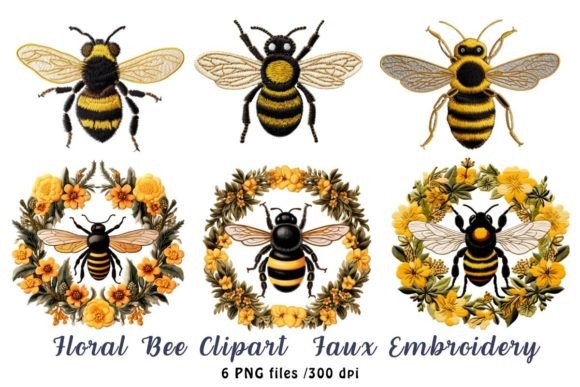
This review focuses on the practical application of the Floral Bee Clipart Faux Embroidery clipart bundle. Designed as high-resolution watercolor-style graphics, these elements offer a unique bridge between digital illustration and physical textile art. Below, I break down how this collection performs in real-world scenarios, from embroidered patches to staff uniforms, and provide critical notes for ensuring your final product meets professional standards.
First Impressions: Visual Personality and Brand Alignment
The term "faux embroidery" in the context of this Illustrations category suggests a visual mimicry rather than a direct digitized file. The Floral Bee Clipart Faux Embroidery set brings a distinct personality to the table: friendly, rustic, yet polished. The watercolor aesthetic softens the typical rigidity of geometric embroidery patterns, making it ideal for brands that want to convey warmth and craftsmanship.
For a boutique florist, a local bakery, or a handmade pet brand, this visual language is potent. It feels handmade without being messy. The inclusion of six distinct elements provides versatility, allowing you to mix and match bees, floral accents, and complementary shapes to create a cohesive brand identity. Unlike stark vector lines, the textured look of these graphics mimics the depth of actual stitching, which can be a significant advantage when creating printable mockups or digital storefront images before committing to production.
Real-World Business Applications
The true test of any machine embroidery design is its adaptability across different merchandise types. Here is how the Floral Bee Clipart Faux Embroidery concept translates into revenue-generating products:
- Embroidered Patches: This is perhaps the strongest use case. The detailed nature of the bee and floral motifs works beautifully as a chest logo accent or a back-of-cap patch. Because the design relies on visual texture rather than complex mechanical movement, it maintains its integrity even when scaled down for smaller applications.
- Staff Uniforms and Aprons: For café owners and restaurant managers, branding staff attire is crucial for customer trust and recognition. A subtle floral bee motif on a pocket or sleeve cuff adds a touch of elegance without overwhelming the uniform. It signals attention to detail and aligns with eco-friendly or natural themes often associated with hospitality.
- Tote Bags and Tote Bag Design: Canvas totes are a staple for crafters and bookstores. Using this design as a focal point allows for a larger, more impactful statement. The watercolor effect looks particularly striking on natural-colored fabrics, enhancing the handmade product appeal.
- Cap Embroidery and Custom Apparel: Whether applied to structured caps or unstructured beanies, the rounded shapes of the bees and flowers fit naturally into curved spaces. This makes them excellent for small business merch that needs to be wearable and stylish.
- Product Packaging Accents: Even if you do not have an embroidery machine, these Graphics can be used to create high-quality labels or hang tags that mimic the look of stitched fabric, adding perceived value to your finished product.
Strategic Considerations and Limitations
While the Floral Bee Clipart Faux Embroidery bundle is visually appealing, there are specific areas where designers must exercise caution. Understanding these limitations prevents costly errors and ensures customer satisfaction.
Small Patch Sizes and Detail Retention: If you plan to digitize these graphics or print them at very small scales (under 2 inches), intricate details may get lost. The delicate petals and fine legs of the bee might merge together, creating a muddy appearance. It is best suited for medium-sized applications where the eye can appreciate the nuance.
High Stitch Density and Fabric Texture: Although this is a faux embroidery graphic, if you are using it as a reference for actual digitization, be mindful of stitch density. Dense fills can cause puckering on lightweight fabrics like thin cotton tees or silk blends. On textured fabrics, such as heavy canvas or wool, the design holds up better, but ensure the background contrast is sufficient.
Dark Uniforms and Contrast: Watercolor styles often rely on light-to-medium tones. On dark uniforms or black tote bags, you will need to use underlay stitches or white backing to make the colors pop. Without proper preparation, the design may appear dull against dark backgrounds.
Frequent Washing Items: For items like work shirts or aprons that undergo frequent industrial washing, ensure that the design area is reinforced. While the visual style is durable, the physical attachment method (whether actual embroidery or heat transfer) must withstand abrasion.
Impact on Brand Identity and Professionalism
In the competitive landscape of Etsy branding and online marketplaces, visual consistency is key. Using a unified design system across your commercial embroidery projects helps build a recognizable brand. The Floral Bee Clipart Faux Embroidery set offers a cohesive theme that ties various products together.
When a customer sees a matching set of a tote bag, a cap, and a pin featuring the same bee and floral motif, it creates a sense of professionalism and thoughtfulness. This visual consistency elevates the perceived value of your goods, moving them from generic commodities to curated lifestyle products. It also enhances buyer engagement, as customers are more likely to share aesthetically pleasing, coordinated merchandise on social media.
Practical Notes for the Embroidery Designer
Before integrating the Floral Bee Clipart Faux Embroidery assets into your production workflow, consider these essential steps:
- Test in Black and White: Convert the design to grayscale to check contrast levels. If the design lacks definition in monochrome, it may struggle to read well in single-color embroidery runs.
- Check Small Patch Size Viability: Scale the design down to its smallest intended output size. Inspect the spacing between elements to ensure no critical details are too close together.
- Review Thread Color Contrast: If digitizing, select thread colors that complement the watercolor palette. Avoid low-contrast combinations that blend into the fabric.
- Confirm Hoop Size: Ensure the final design fits within standard hoop dimensions. Oversized designs may require multiple hooping setups, increasing production time.
- Test on Real Fabric: Always run a sample on the actual fabric type you intend to use. Fabric texture can significantly alter the final appearance of the design.
- Use Proper Stabilizer: Choose a stabilizer that matches the fabric weight to prevent distortion during stitching.
- Create a Printable Mockup: Before producing bulk orders, generate a realistic mockup for client approval. This helps manage expectations regarding color and scale.
- Compare Beside Other Assets: Place the design next to your other digital embroidery file collections to ensure it aligns with your overall brand aesthetic.
- Confirm Commercial Licensing: Most importantly, verify the commercial licensing terms. Ensure you have the right to use these design assets for resale on physical goods. Check for any restrictions on print runs or distribution channels.
The Floral Bee Clipart Faux Embroidery bundle offers a compelling option for businesses seeking to add a touch of organic elegance to their merchandise. By approaching it with a strategic mindset and adhering to best practices in production, you can create high-quality, branded products that resonate with your audience and drive sales.